Finding Stillness in a World of Ruins: An Ode to Forgotten Kingdoms
In an age of gaming defined by relentless action, battle royales, and the constant demand for our attention, there is a profound need for spaces of quiet. We often seek virtual worlds as an escape, only to find them as demanding as the one we left behind. It is in this clamorous landscape that a game like Forgotten Kingdoms emerges not with a shout, but with a whisper. It is an invitation to wander, to wonder, and to simply be in a world that has long since fallen silent.
This is not a review in the traditional sense, but rather a reflection on the experience. If you are looking for a guide to the fastest route to max level or the most efficient build for player-versus-player combat, you may find yourself disappointed. But if you are seeking a digital sanctuary, a place to lose yourself in the gentle art of exploration, then read on. Forgotten Kingdoms is a slow, deliberate, and beautifully melancholic journey into the heart of what was, and what remains.

Whispers of the Past: The Art of Environmental Storytelling
From the moment you first step into the world of Forgotten Kingdoms, the game’s primary narrative voice becomes clear: it is the environment itself. There are no lengthy expository cutscenes or journals filled with dense lore. Instead, the story is etched into the crumbling stone of an abandoned castle, overgrown with ivy. It is whispered by the wind that howls through the skeletal remains of a forgotten city. It is reflected in the quiet, somber notes of the soundtrack that seem to echo the sadness of the land.
You will come across a small, dilapidated cottage, its roof caved in and a single, rusted cooking pot still hanging in the fireplace. A child’s wooden toy, half-buried in the soil near the doorstep, tells a more poignant story than any written text could. In a grand cathedral, the stained-glass windows are shattered, but the morning sun filters through the broken panes, casting fractured rainbows on the dusty floor, illuminating the ghosts of a faith that once was.
This approach to storytelling demands a patient and observant player. Forgotten Kingdoms does not hand you its history; it allows you to uncover it, piece by subtle piece. It trusts you to feel the narrative rather than to be told it. This creates a deeply personal connection to the world. The stories you construct in your mind, based on the clues left behind, often feel more real and impactful than any scripted plotline.
The Pace of a Wanderer: Embracing a Slower Rhythm
Modern gaming often conditions us for speed. We sprint through open worlds, our eyes glued to waypoints and objective markers, our journey a blur between points A and B. Forgotten Kingdoms actively dismantles this habit. There is no mini-map cluttered with icons. There is no urgent quest giver demanding you save the world by nightfall.
Here, the primary objective is to explore. The game encourages you to walk, not run. To stop and watch the way the light changes as the virtual day cycles from dawn to dusk. You will find yourself pausing at a cliff’s edge to watch the fog roll through a valley below, or sitting by a serene, forgotten lake, listening to the ambient sounds of nature reclaiming the land.
This deliberate pacing is not a flaw; it is the game’s greatest strength. It re-calibrates your internal clock. The frantic energy of daily life begins to ebb away, replaced by a tranquil mindfulness. You become attuned to small details: the pattern of moss on an ancient statue, the unique architecture of different ruined cultures, the gentle, almost imperceptible shift in the music as you move from a forest into a desert. In this slowness, you find a rare form of digital meditation.
A Palette of Melancholy and Hope: The Visual and Aesthetic Soul
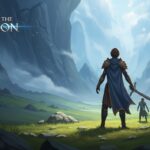
The visual design of Forgotten Kingdoms is a masterclass in evoking emotion through color and light. This is not a world of garish, oversaturated fantasy. The palette is often muted, leaning into soft greys, dusty browns, deep greens, and hazy blues. It is a world painted with the colors of memory and loss.
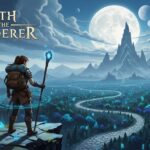
Yet, within this melancholy, there are constant sparks of breathtaking beauty and quiet hope. You might traverse a desolate, grey canyon only to round a corner and find a hidden grove, vibrant with bioluminescent flora that glows with an ethereal light as dusk falls. The ruins themselves are not just symbols of decay, but testaments to the grandeur that once was. The scale of a collapsed bridge or the intricate carvings on a worn-down monolith speak of a people with immense skill and ambition.
This balance is crucial. The game never allows the sorrow of a fallen world to become oppressive. It constantly reminds you that life, in its own persistent way, endures. Flowers bloom from cracked cobblestones. Trees have taken root in the halls of kings. It is a poignant lesson in cycles—of rise and fall, of ending and beginning. The beauty is in the decay, and the hope is in the resilience of nature and the memory that lingers in the stones.
Leaving Your Own Faint Mark on the World
While Forgotten Kingdoms is a solitary experience at its core, it contains a subtle, beautiful multiplayer element that perfectly aligns with its calm tonality. You do not see other players in real-time as avatars. Instead, you may occasionally come across their faint, ghostly echoes—a momentary shimmer of another wanderer who stood in that exact spot hours or days before.
Furthermore, you can leave behind small, non-intrusive markers for others. A softly glowing rune on a hidden path, a gentle chime that plays a single, clear note, or a small, arranged pile of stones. These are not messages of “git gud” or boasts of achievement. They are silent nods of solidarity from one explorer to another. They say, “I was here. I saw this too. Isn’t it peaceful?” This creates a profound sense of shared, quiet community, connecting you to other players without ever breaking the serene immersion.
A Sanctuary for the Weary Soul
Forgotten Kingdoms will not be for everyone. It is a niche, an acquired taste for those who find solace in silence and meaning in emptiness. It is a game that asks very little of you, yet, if you are willing to meet it on its own terms, it gives so much in return.
It offers a space to breathe, to think, and to feel a sense of awe that is not born from explosive spectacle, but from quiet, profound beauty. In a world that is always loud, always on, and always demanding, Forgotten Kingdoms is a digital sanctuary. It is a gentle reminder that sometimes, the most powerful stories are the ones heard in the silence, and the greatest adventures are the ones that lead us not to a destination, but back to a place of calm within ourselves.