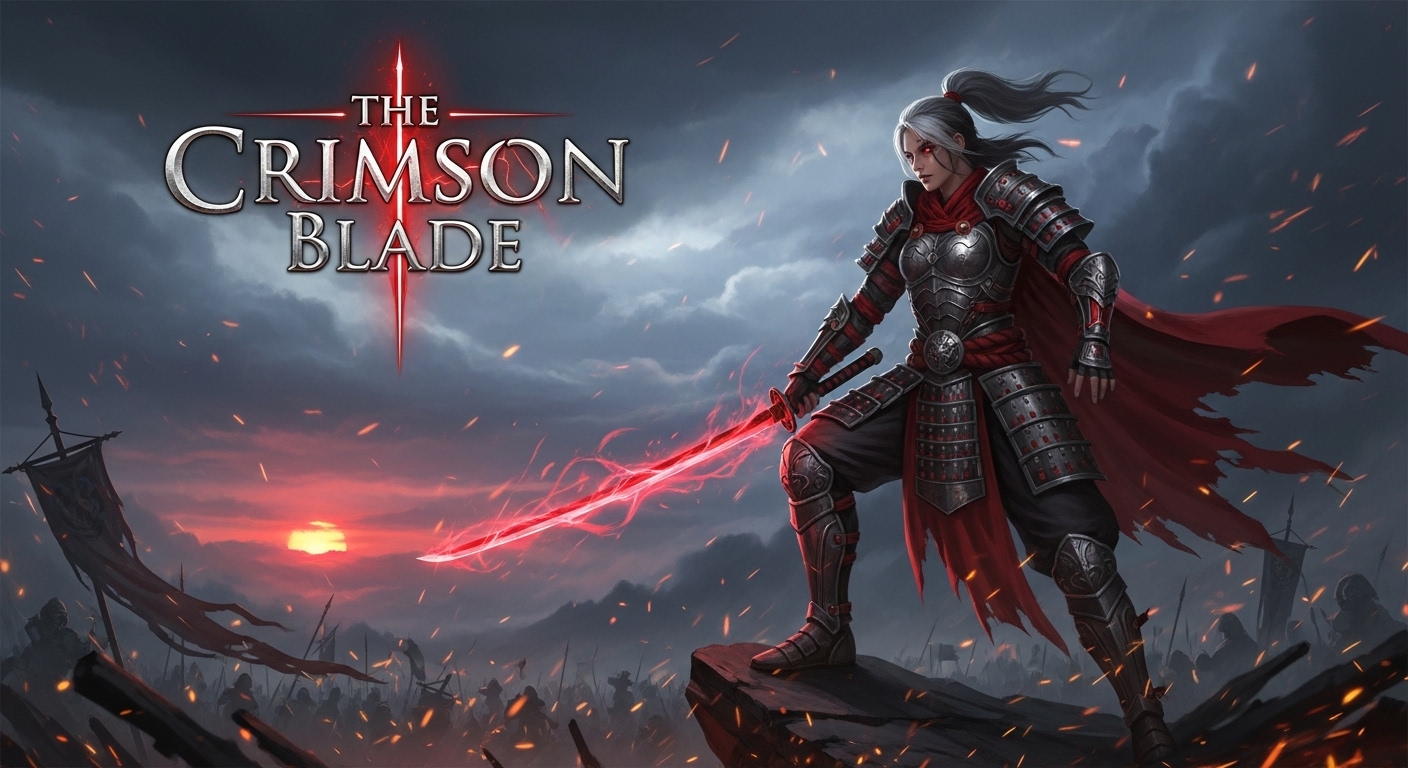
Finding Stillness in the Steel: A Journey Through The Crimson Blade
In an age where video games often compete for our attention with explosive set pieces and relentless action, there is a quiet solace to be found in the graceful, deliberate world of The Crimson Blade. At first glance, one might mistake it for another action-adventure title, its name evoking images of frenetic combat and a hero drenched in the gore of their enemies. But to make such an assumption is to miss the profound heart of this experience. The Crimson Blade is not a game about violence; it is a game about purpose, memory, and the quiet weight of a legacy carried in a single, elegant weapon.
This is not a journey to be rushed. It is one to be savored, step by mindful step, as if you were walking through a landscape painted on silk.
The Echo of a Legacy, Not the Clamor of Battle
You are not a nameless warrior. You are the last inheritor of the Crimson Blade, a weapon of immense power and profound history. The game begins not with a tutorial on combo attacks, but with a quiet ceremony. The blade is passed to you, its weight cool and significant in your hands. The world around you is one of gentle decline—a once-great civilization now receding into the mist of time and the relentless advance of a lush, consuming nature.
The narrative is not fed to you through lengthy cutscenes or pages of exposition. Instead, it is woven into the fabric of the world. You find it in the faded murals of forgotten temples, in the whispers of the wind through ancient ruins, and in the subtle, melancholic score that seems to breathe with the environment. Your goal is not to conquer, but to understand. To piece together the story of those who came before you and to comprehend the true purpose of the blade you now carry. This reflective pacing immediately establishes a calm, almost meditative tone.
A World That Breathes: The Art of Atmospheric Exploration
The world of The Crimson Blade is a character in itself. The art direction leans into a soft, watercolor aesthetic. Sunlight filters through dense canopies of bamboo, painting dappled shadows on moss-covered stone. Mist clings to mountain valleys, and serene ponds perfectly reflect the crumbling architecture that surrounds them. There is a profound beauty in the decay, a reminder that all things, even great empires, eventually return to the earth.
Exploration is the core of the gameplay loop, and it is designed to be a mindful activity. There is no minimap cluttered with icons. Instead, you navigate by intuition and observation, using the position of the sun, the flow of rivers, and the unique silhouettes of the landscape as your guide. The act of moving through this world is calming. The sound design is meticulous—the crunch of gravel underfoot, the distant call of a bird, the gentle rustle of leaves. It is an invitation to slow down, to look around, and to simply be present in this beautifully somber world.
The Dance of the Blade: Combat as Conversation
When conflict does arise, The Crimson Blade transforms its core mechanic into something more akin to a dialogue than a brawl. The enemies you face are not mindless monsters, but manifestations of lingering regret, unresolved conflict, and corrupted memories. They are as much a part of the world’s history as the ruins you explore.
Combat is a deliberate, almost ritualistic dance. It is based on timing, posture, and reading your opponent’s intentions. Holding the block button will not save you. Instead, you must parry with precision, a single, clean chime of steel signaling a successful deflection. Attacks are not meant to be spammed; each swing is committed, carrying weight and consequence. The goal is to break your opponent’s stance, not to hack away at a health bar. When you finally deliver the decisive strike, it is not a moment of gory triumph, but a release. The enemy dissolves not into a spray of blood, but into shimmering light, a regretful memory finally laid to rest.
This approach to combat reframes it from an act of aggression to an act of resolution. It is a quiet, respectful, and deeply satisfying system that perfectly complements the game’s overall tone.
The Quiet Power of the Score
It would be a disservice not to mention the profound role of the soundtrack. The music in The Crimson Blade is a masterclass in atmospheric subtlety. For long stretches, your only companion is the ambient soundscape of the world. The music swells gently during key moments of discovery or when facing a significant “memory” in combat. The melodies are often carried by soft pianos, haunting flutes, and ethereal strings, always serving the emotion of the moment rather than demanding your attention. It is a score that breathes with you, guiding your emotional journey without ever overwhelming it.
A Reflection on Purpose
As you progress, you begin to uncover the truths behind the Crimson Blade. You learn of the great peace it was meant to uphold and the tragedy that led to its wielder becoming a figure of legend rather than a living guardian. The game poses quiet, philosophical questions. What does it mean to inherit a duty you did not choose? How do we honor the past without being enslaved by it? Is a legacy a burden or a gift?
The answers are not handed to you. They form in the spaces between your actions, in the quiet moments of contemplation as you stand on a cliffside, looking out over the world you are helping to heal, or simply to understand.
Conclusion: An Experience to Be Felt
The Crimson Blade will not be for everyone. Those seeking a fast-paced, adrenaline-fueled adventure may find its pacing too deliberate. But for those who are willing to meet it on its own terms, it offers a rare and precious experience. It is a game that values introspection over reaction, atmosphere over action, and resolution over domination.
In the end, The Crimson Blade is less a game and more a serene pilgrimage. It is a reminder that power can be found in stillness, that stories can be told in silence, and that the most profound journeys are often the ones we take not to save the world, but to understand our place within it. It leaves you not with the thrill of victory, but with the quiet, lingering peace of a question finally answered.