Finding Stillness in the Storm: An Introduction to Siege Protocol
In the bustling, often chaotic landscape of modern gaming, where flashy visuals and frantic action frequently take center stage, there exists a quiet corner for those who prefer deliberation to impulsivity. Here, in the realm of strategy games, we find a particular gem that rewards patience and foresight: Siege Protocol. It is a game that does not shout for your attention, but rather, invites you to lean in and listen to the subtle mechanics of its design.
If you have ever felt the desire for a game that allows you to think, to plan, and to see your careful strategies unfold with satisfying precision, then this quiet introduction is for you. We will walk gently through the world of Siege Protocol, exploring its core concepts not with the fervor of a battle cry, but with the calm clarity of a tactician surveying the board before the first move is made.
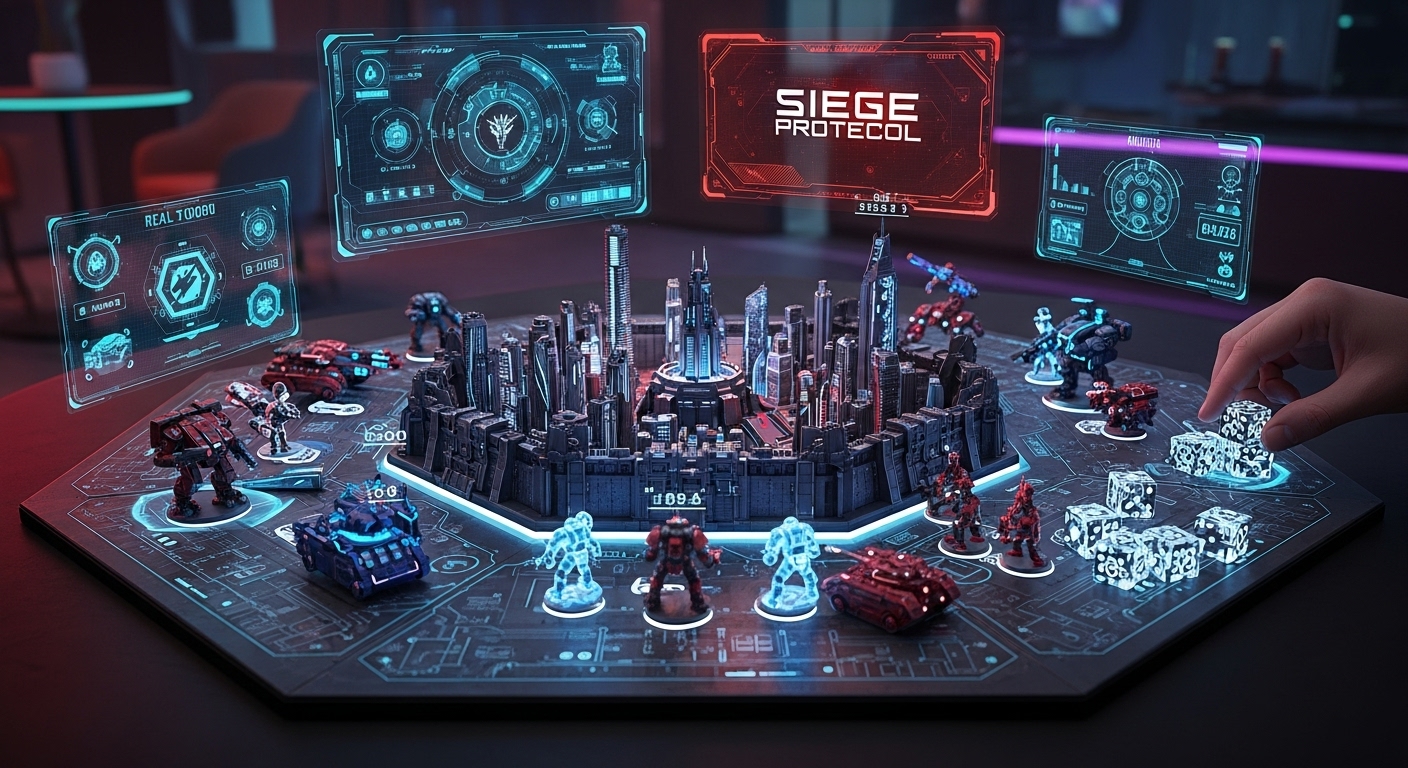
The Core Loop: A Dance of Strategy and Physics
At its heart, Siege Protocol is a turn-based tactical puzzle game. This simple description, however, belies the depth of its engagement. Each level presents you with a goal, typically the destruction of an enemy structure or unit, and a limited number of turns with which to achieve it. You control a small, powerful mech, and your tools are a combination of movement, positioning, and a primary weapon: the ability to launch a projectile.
The beauty of the game lies in this primary action. Aiming and firing your weapon is a physics-based endeavor. You must consider angle, power, and the often delightful chaos of ricochet. One perfectly placed shot can careen off two walls and eliminate a key target, completely bypassing their defenses. This transforms each turn from a simple action into a thoughtful experiment. It is a dance between the predictable rules of geometry and the unpredictable outcomes of a dynamic battlefield.
The Calm of the Turn-Based Structure
One of the most soothing aspects of Siege Protocol is its unwavering commitment to the turn-based format. There are no timers counting down, no enemies moving in real-time to pressure your decisions. The game world is entirely still until you decide to act. This creates a space for genuine contemplation.
You are free to spend minutes—or longer—simply observing the level layout. You can trace potential trajectories in your mind, identify weak points in enemy fortifications, and consider the order of your operations. This pace is a gift to the thoughtful gamer. It allows for a state of flow that is interrupted only by your own readiness, reducing the stress and reactivity that often accompany other genres. In Siege Protocol, your greatest asset is not quick reflexes, but a quiet and focused mind.
Tools of the Trade: More Than Just Firepower
While your main cannon is your bread and butter, the game gradually introduces a suite of specialized tools that expand your strategic vocabulary. You might gain access to a ricochet shot that is designed specifically for banking off surfaces, or a powerful explosive round that trades precision for area-of-effect damage.
Later, you may command support units, adding another layer to your tactical considerations. Perhaps a smaller, mobile unit can be positioned to draw enemy fire, or a specialized drone can be used to activate a switch from across the map. The introduction of these elements is gradual and thoughtful, ensuring that you are never overwhelmed. Each new tool feels like a new word added to your vocabulary, allowing you to form more complex and elegant strategic sentences.
The Learning Curve: A Gentle Ascent
Siege Protocol understands that its players are there for the satisfaction of solving a puzzle, not for punishing difficulty spikes. The learning curve is a gentle, steady ascent. The early levels serve as a tranquil tutorial, introducing core concepts like direct firing, ricochets, and the importance of environmental destruction in a safe, controlled manner.
As you progress, the game introduces new enemy types and environmental hazards naturally. You will encounter shielded units that force you to consider new angles, or enemies that return fire, making your positioning critically important. Yet, failure never feels like a harsh punishment. Instead, it feels like data collection. A failed attempt simply reveals more information about the puzzle, bringing you one step closer to the elegant solution that you know exists.
A World of Tactical Possibilities
Beyond the core campaign, Siege Protocol often offers additional modes and challenges that extend its lifespan and deepen its strategic appeal. These can include challenge levels that strictly limit your number of turns, or “perfect victory” conditions that require you to eliminate all enemies without losing a single unit of your own.
These modes are where the game truly opens up for the dedicated player. They encourage repeated play and experimentation, inviting you to see the game’s levels not as a linear path, but as a sandbox of tactical possibilities. Finding the most efficient, most clever solution becomes a rewarding pursuit in itself, a quiet testament to your growing mastery of the game’s systems.
A Quiet Oasis in a Loud Genre
In a broader sense, Siege Protocol serves as a quiet oasis within the strategy genre. Its clean visual style, uncluttered UI, and focused gameplay create an experience that is both intellectually stimulating and remarkably serene. The sound design often complements this, with satisfying but muted audio cues for actions and impacts, ensuring the spotlight remains on your train of thought.
It is a game that proves complexity does not have to mean convolution, and that challenge does not have to mean stress. It is a title you can return to at the end of a long day, not to get an adrenaline rush, but to engage in a calm, methodical, and deeply satisfying exercise in problem-solving.
Conclusion: A Game for the Thoughtful Player
Siege Protocol may not be the loudest or most visually extravagant game you play this year, but it may very well be one of the most memorable. It is a testament to the enduring appeal of pure, thoughtful strategy. It respects your intelligence, values your patience, and rewards your foresight with moments of quiet triumph.
If you are looking for a game that allows you to pause, to plan, and to appreciate the graceful unfolding of a well-laid plan, then this is a world worth stepping into. In the calm, deliberate dance of Siege Protocol, you may just find a unique and refreshing peace.