Finding Focus in the Glow: The Quiet Philosophy of Neon Horizon Games
In the bustling, often chaotic landscape of video games, where trailers scream for attention and hype cycles spin at a dizzying rate, there exists a different kind of space. It’s a space defined not by noise, but by atmosphere. It’s the digital realm of Neon Horizon Games, a developer whose very name evokes a specific, calming feeling: the quiet awe of a city at night, viewed from a distance, where the hum of technology is a lullaby and the neon lights are gentle guides in the dark.
To play a game from Neon Horizon is to understand that intensity and calm are not opposites. Their creations are not passive, but they possess a meditative quality that is increasingly rare. They remind us that within the most complex systems and the most vibrant visuals, we can still find a moment to breathe, to observe, and to simply be.
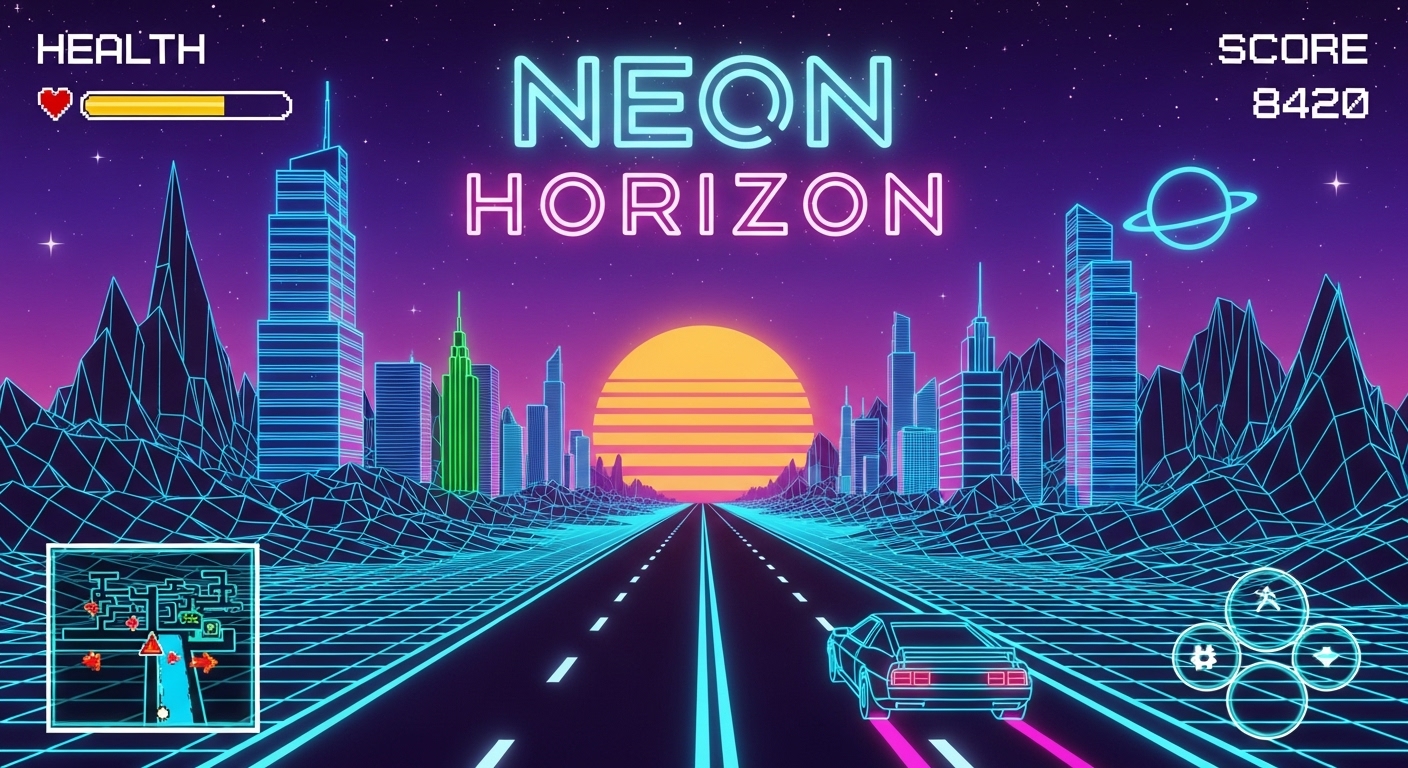
More Than a Palette: The Emotional Resonance of Neon
The word “neon” often conjures images of sensory overload—Times Square, Blade Runner, arcades pulsing with light. But Neon Horizon Games approaches this aesthetic with the thoughtful hand of a painter. Their neon is not a weapon of distraction; it is a tool for emotion and guidance.
In their worlds, a soft magenta glow might highlight a quiet alleyway, inviting exploration. A cool, cerulean blue from a data terminal might cast long, peaceful shadows across a minimalist apartment. The signature aqua and deep violet of a perpetual night sky don’t feel oppressive, but rather like a comfortable blanket, a constant that grounds the player. This careful use of color does more than please the eye; it directly influences the pace of play. It encourages a slower, more observant approach, where the environment itself is a character to be understood and appreciated.
This is a deliberate rejection of the notion that engagement must be frantic. The “horizon” in their name is equally significant. It suggests a future that is not dystopian or utopian, but simply present. It’s a world that has moved on, leaving behind quiet spaces for the player to inhabit. The horizon is a line of possibility, not a threat, and moving toward it feels like a personal journey rather than a race against time.
Architecture of Silence: The Design Principles of a Neon Horizon Game
The calm tonality of a Neon Horizon title is not an accident; it is the direct result of a core set of design principles that prioritize player immersion and mental space over compulsive action.
Pacing as a Narrative Tool
You will rarely find yourself in a frantic firefight or a quick-time event sequence in their games. Instead, the primary mechanics are often exploration, puzzle-solving, and environmental storytelling. The game respects your time, allowing you to set your own pace. A journey across a sprawling, rain-slicked city might be punctuated by moments where you simply stop to watch a holographic advertisement cycle through its loop, or listen to the distant hum of a flying vehicle. These are not wasted moments; they are the essence of the experience, building a world that feels lived-in and real.
The Power of Ambient Soundscapes
The audio design is a masterclass in subtlety. The soundtrack, often a blend of synthwave and ambient electronic music, is not a dominant force but a gentle undercurrent. It swells at moments of discovery and recedes during periods of contemplation. More important are the diegetic sounds: the gentle patter of rain, the echo of your own footsteps on wet pavement, the low thrum of a server farm, the muffled melody from a club down the street. This soundscape creates a bubble of focus, isolating you from the real world and pulling you deeper into the game’s serene reality.
Minimalist Interfaces
Cluttering the screen with maps, quest markers, and health