Finding Stillness in Motion: An Invitation to the Path of the Wanderer
In a world that often feels relentlessly fast, where our digital lives are a constant stream of notifications and our to-do lists never seem to end, the idea of stillness has become a precious commodity. We seek it in meditation apps, in quiet corners of our homes, and in the brief moments before sleep. But what if true stillness isn’t found in stopping, but in a different kind of motion? This is the gentle, profound question at the heart of Path of the Wanderer, a video game that feels less like a traditional pastime and more like a digital sanctuary.
Unlike games built on conflict, urgency, and high scores, Path of the Wanderer invites you into a different rhythm. It is a game of exploration, not conquest. A journey of observation, not intervention. From the moment you first guide your character onto the screen, you are met not with a quest to save the world, but with a simple, unspoken invitation: to walk, to see, and to be.
More Than a Game: The Philosophy of Wandering
The very title, Path of the Wanderer, gives away its core philosophy. A wanderer is not a tourist, rushing from one landmark to the next. A wanderer is not an adventurer, seeking to overcome great dangers. A wanderer is one who moves for the sake of moving, who finds purpose in the path itself, not just the destination.
This game beautifully translates this philosophy into an interactive experience. There are no enemies to fight, no time limits to race against, and no fail states to fear. The world is not a puzzle to be solved, but a landscape to be felt. The goal is your own sense of curiosity and peace. This deliberate design choice lifts the weight of performance and achievement from your shoulders, allowing you to simply exist within its beautifully rendered world.
A World That Breathes: The Art and Atmosphere
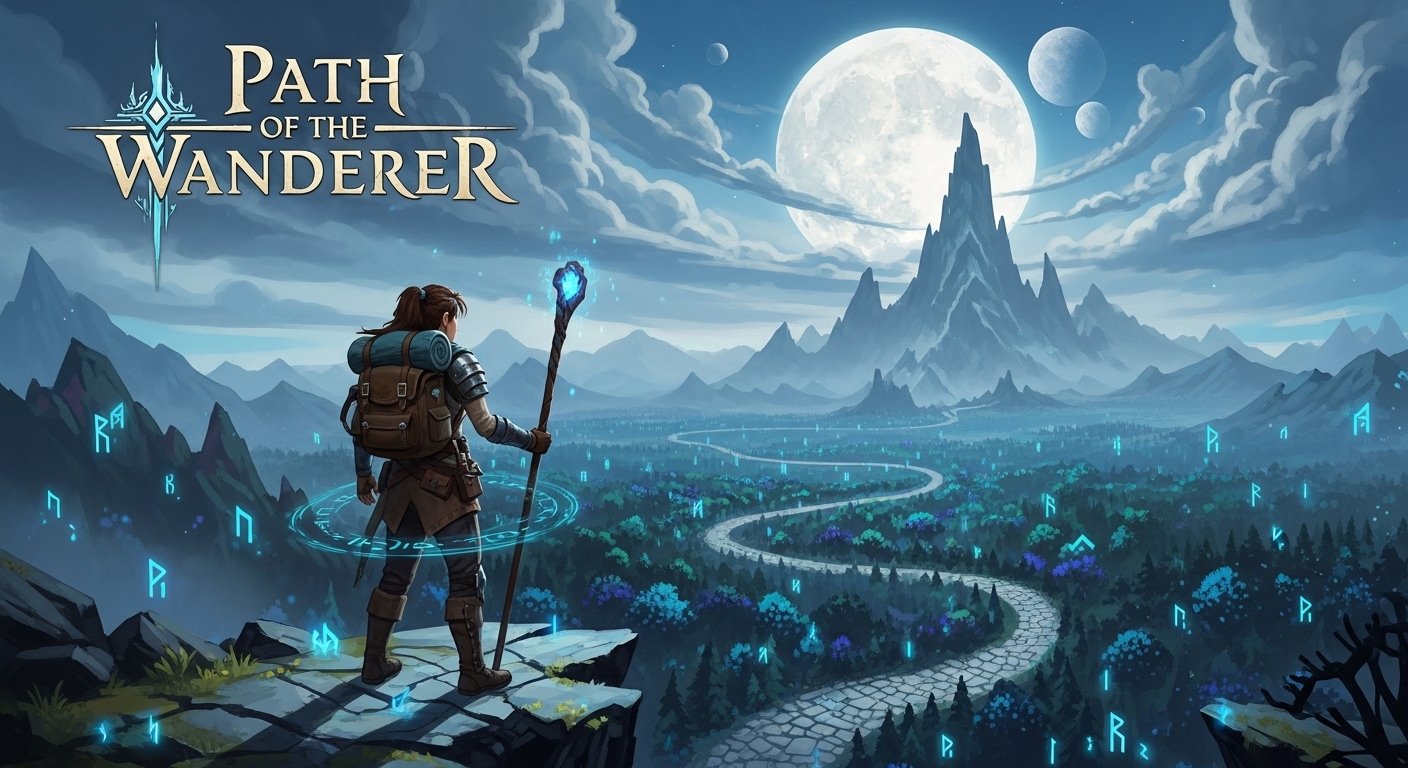
The visual and auditory design of Path of the Wanderer is its most powerful language. The art style tends toward the soft and the painterly. You might find yourself walking through mist-shrouded forests where sunlight filters gently through a canopy of leaves, across vast, windswept plains where the grass ripples like water, or alongside quiet, meandering rivers.
The color palette is muted and natural, a balm for eyes tired of the aggressive, saturated colors of so much modern media. This is a world that feels alive in its quiet way. You’ll notice the subtle change of light as the day cycles from dawn to dusk, hear the distant call of a bird or the rustle of unseen creatures in the undergrowth. The soundtrack is a masterpiece of ambient composition—a blend of soft piano notes, ethereal pads, and the authentic sounds of nature that never intrudes, but only enhances the sense of place.
This harmonious blend of sight and sound creates a deeply immersive atmosphere. It’s a world that doesn’t demand your attention but patiently holds it, encouraging you to slow down and notice the small details: the pattern of moss on a stone, the way shadows lengthen in the late afternoon, the unique shape of a distant mountain.
The Gentle Guidance of Discovery
While Path of the Wanderer is non-linear and open-ended, it is not without direction. The game employs a subtle, elegant system of guidance. You might spot a strangely shaped tree on a hilltop and feel compelled to investigate. A constellation of fireflies might gather at the edge of a forest, hinting at a path less traveled. The landscape itself is your map and your guide, using natural landmarks and a gentle pull of curiosity to lead you forward.
As you wander, you will uncover traces of stories. You might find the ruins of an old homestead, a forgotten shrine tucked away in a canyon, or journal pages left by a previous traveler. These narratives are not presented with dramatic cutscenes or lengthy dialogue. They are fragments, whispers from the past that allow you to piece together the history of the land in your own mind. This passive storytelling respects your intelligence and your mood, offering meaning without forcing it upon you.
A Meditation in Interactivity
This is where Path of the Wanderer transcends being a mere game and becomes a form of interactive meditation. The core loop—walking, observing, and discovering—is inherently mindful. The simple, rhythmic act of moving your character through this serene world can have a calming effect on your own nervous system. Your focus narrows to the path ahead, the sound of your footsteps, and the next beautiful vista.
In this space, your mind is given permission to unwind. The constant internal chatter begins to quiet. Thoughts come and go like clouds, without the usual urgency to act on them. Playing for even thirty minutes can feel like a reset—a digital walk in the woods that leaves you feeling more centered and clear-headed. It’s a game you play not to escape reality, but to return to it feeling more present and peaceful.
Who is the Wanderer?
You do not need to be a “hardcore gamer” to appreciate this experience. Path of the Wanderer is for anyone seeking a moment of respite. It is for the stressed professional needing to decompress after a long day. For the creative soul looking for a spark of inspiration in a beautiful environment. For the individual who may be physically unable to hike a real mountain but yearns for the feeling of standing atop one and looking out at the world. It is for anyone who remembers the simple childhood joy of exploring a place just to see what was there.
Embarking on Your Own Journey
Path of the Wanderer does not offer a grand finale or a definitive ending. Its value is not in its conclusion, but in the hours spent within its world. It is a game to return to, a familiar landscape that remains constant as your own inner world changes. Each session can be a new journey, a different path chosen on a whim, a new secret found in a corner you previously overlooked.
In the end, the game leaves you with a quiet gift: the reminder that the path is always there. That in the simple act of moving with intention and awareness, we can find a deep and lasting stillness. So, when the noise of the world becomes too much, remember that there is a path waiting—a place to wander, to breathe, and to simply be.