Finding Stillness in the Fog: An Invitation to the Realm of Mist
In a world that often prizes speed, clarity, and immediate gratification, there is a profound comfort in finding a space that asks for the opposite. We are drawn to experiences that allow us to slow our pace, to lean into ambiguity, and to find beauty in the quiet and the obscured. It is in this search for contemplative digital landscapes that many of us have discovered a gentle giant: the game known as Realm of Mist.
This is not a review in the traditional sense, nor a frantic guide to conquer its challenges. Rather, it is an invitation. An invitation to consider what it means to wander, to wonder, and to simply be present in a world that doesn’t demand your urgency, but patiently awaits your curiosity.
More Than a Game: The Allure of Ambiguity
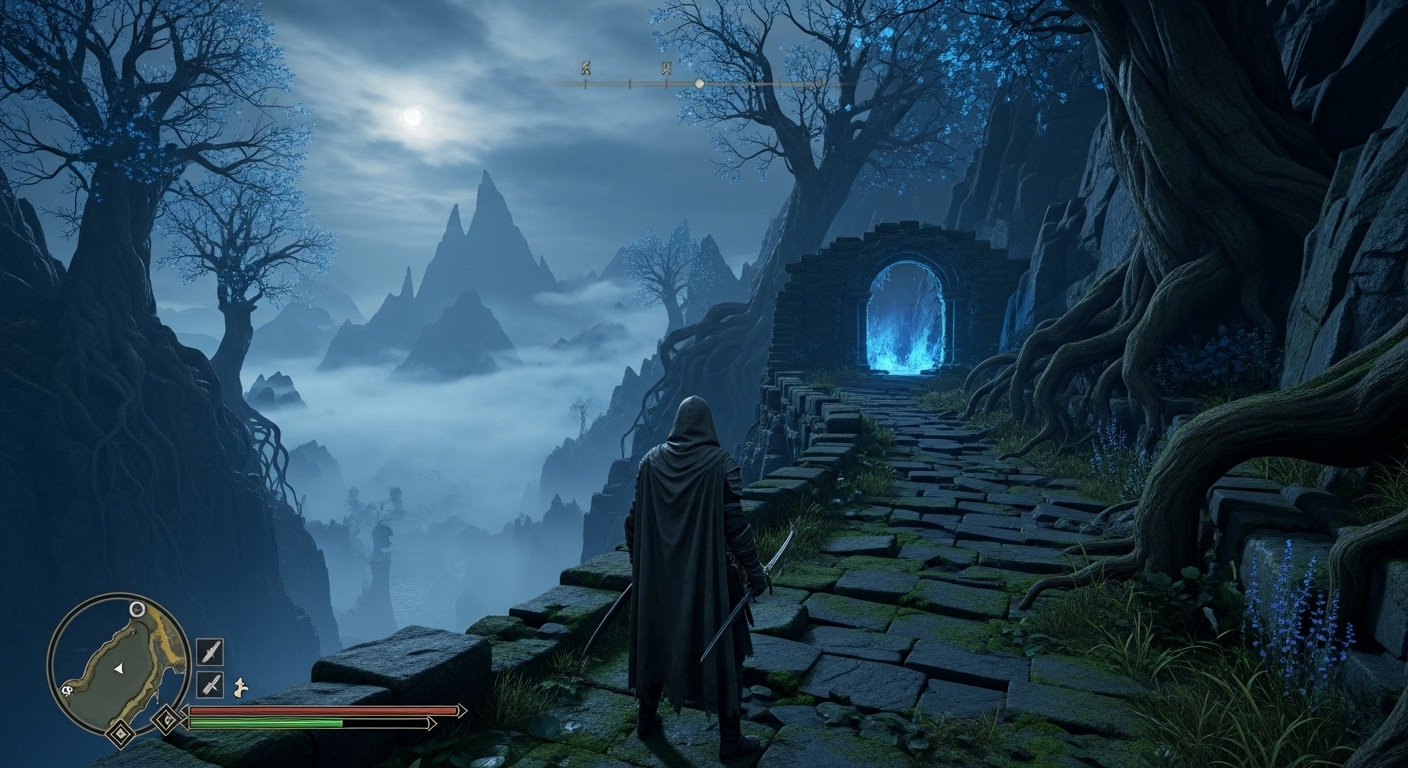
From the moment you step into the Realm of Mist, the game’s central motif is clear: the fog. It is not a fog of menace, as one might find in a horror story, but a fog of mystery and soft focus. It blankets the landscapes, muting colors and softening edges, creating a world that feels both vast and intimately close. The sound design follows suit; the crunch of gravel underfoot, the distant call of an unseen bird, and a haunting, minimalist score that seems to breathe with the environment itself.
This deliberate ambiguity is the game’s greatest strength. Where other games might present you with a glowing arrow or a cluttered mini-map, Realm of Mist offers you silence and suggestion. A strangely shaped tree, a flicker of light in the distance, a half-remembered melody on the wind—these are your guides. This design philosophy asks you to shed the habit of objective-chasing and instead, to trust your intuition. It rekindles a sense of genuine exploration, where the journey is not a means to an end, but the very point of the experience.
A Tapestry Woven from Exploration and Discovery
To speak of Realm of Mist’s gameplay is to speak of a slow, deliberate unraveling. There are no monstrous foes to slay, no time limits pressing upon you. The core loop is one of observation, connection, and gentle puzzle-solving.
You are a wanderer, piecing together the story of this land not through lengthy cutscenes or data logs, but through environmental storytelling. You might find a series of abandoned paintings that, when viewed in the correct order, hint at a personal tragedy. You may encounter spectral echoes of the past, silent tableaus that play out a moment in time, leaving you to interpret the emotions and events. The puzzles are often integrated seamlessly into the world—aligning celestial bodies in a ruined observatory, or restoring power to a mechanism by tracing the path of ancient ley lines.
Each discovery feels earned and personal. There is no one shouting the plot at you; the narrative is a delicate artifact you are helping to excavate. This process is deeply meditative. It requires a quiet mind and a patient eye, rewarding you not with loot or experience points, but with moments of profound understanding and aesthetic beauty.
A Visual and Aural Sanctuary
It would be a disservice to discuss Realm of Mist without paying homage to its artistic and auditory presentation. The art style leans into a painterly aesthetic, where landscapes often resemble moving watercolors. Sunlight filters through the canopy in dappled rays, and the mist itself is a dynamic entity, swirling and parting to reveal hidden paths before closing in again. This is a world that begs to be photographed, a world where you will frequently stop simply to absorb the view.
The soundscape is equally masterful. The developers understand the power of silence, using it to frame the delicate sounds of the world. The rustle of leaves, the drip of water in a cavern, the creak of an old wooden bridge—these sounds are not just background noise; they are vital information and emotional anchors. The musical score is used sparingly, swelling only at key moments of discovery or when you enter a place of significance. This restraint makes these musical cues all the more powerful, elevating moments of revelation into something truly sublime.
The Quiet Resonance: What Stays With You
The true magic of Realm of Mist is not confined to the hours you spend playing it. Its resonance lingers long after you’ve closed the game. In a subtle but noticeable way, it can recalibrate your perception. You may find yourself more observant on your daily walk, noticing the way the light hits a building or the pattern of clouds in the sky. The game’s ethos of patient exploration can become a gentle reminder to approach your own world with a little more curiosity and a little less rush.
It serves as a digital sanctuary—a place to decompress after a demanding day. The absence of conflict, the emphasis on beauty, and the demand for a slower cognitive pace have a therapeutic quality. It is a game that doesn’t drain your energy, but replenishes it. It proves that interactive entertainment can be a form of active meditation, a space for introspection and calm.
An Oasis for the Weary Traveler
Realm of Mist will not be for everyone. If your primary joy in gaming comes from competitive multiplayer, complex skill trees, or high-stakes action, you may find its pace too deliberate. But for those who feel a pull towards the serene, the mysterious, and the beautiful, it is nothing short of a gift.
It is a love letter to the act of discovery itself, a beautifully crafted world that values the question over the answer. In the quiet, mist-shrouded landscapes of this remarkable game, you are not a hero destined to save the world. You are a traveler, an archaeologist of emotion, and a witness to forgotten stories. And in that simple, profound role, you may just find a sense of peace you didn’t know you were looking for. So, when you feel the world is too loud, too bright, and too fast, know that there is a realm waiting, where the fog is soft, the silence is deep, and the greatest adventure is the one that unfolds within.