Finding Stillness in the Storm: A Journey into Warlords of Emberfall
In the bustling, often overwhelming landscape of modern gaming, where frenetic action and sensory overload can be the norm, there is a unique comfort to be found in a game that asks for your patience as much as your passion. Warlords of Emberfall is one such game. At first glance, it presents itself as a strategic card-battler, a game of conquest and kingdom-building. But to view it only through that lens is to miss its deeper, more meditative soul. This is not just a game about becoming a warlord; it’s an experience about building a legacy, piece by deliberate piece, in a world painted in the dying embers of a fading age.
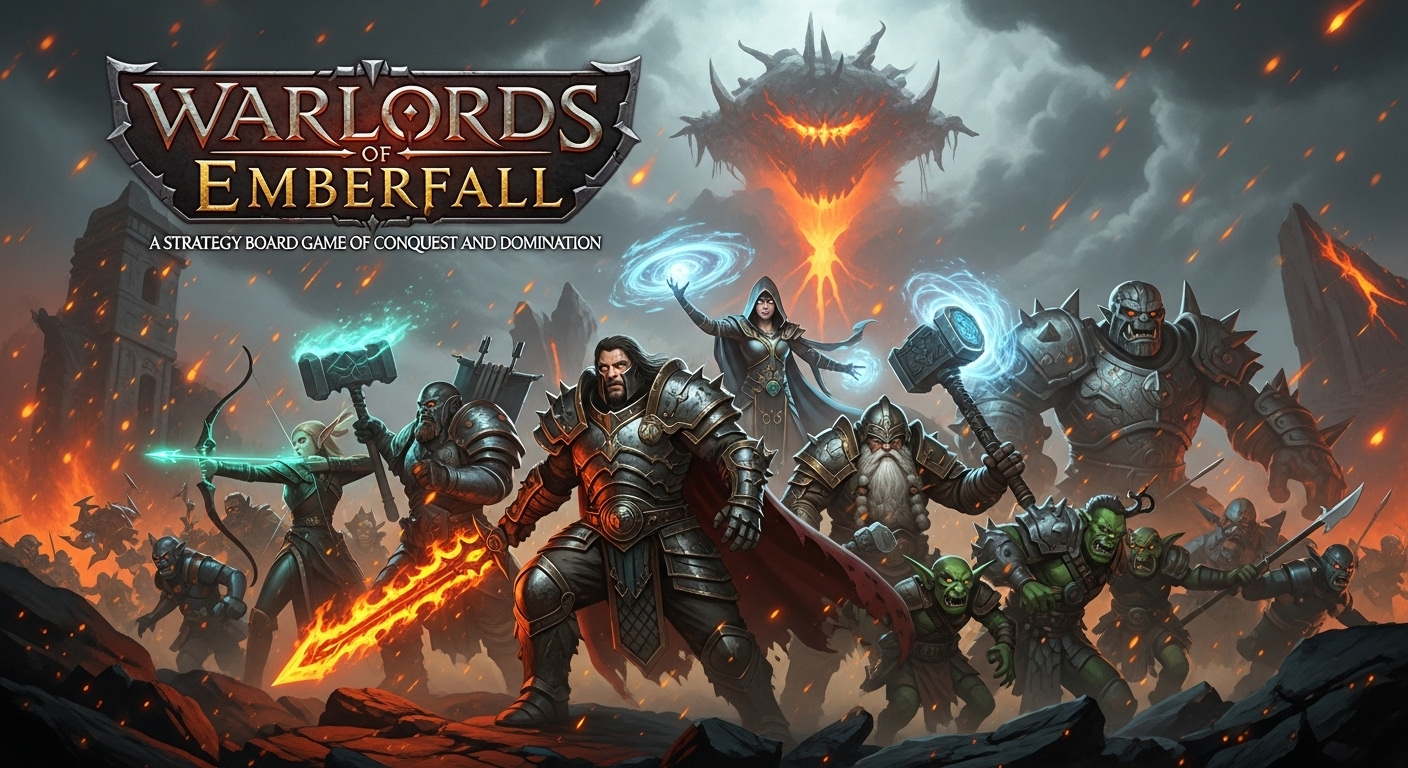
The world of Emberfall is a character in itself. It is not a realm of blinding brightness and primary colors, but one of perpetual twilight. The artists have masterfully wielded a palette of deep burgundies, burnished golds, and shadowy blues, creating an atmosphere that feels both ancient and intimate. The sun always seems to be setting, casting long shadows across the cobblestone paths of your keep and glinting off the armor of your assembled units. This aesthetic choice is fundamental to the game’s calm tonality. There is no rush here. The world is old, its conflicts are deep-seated, and it invites you to settle in, to observe, and to think.
The Gentle Cadence of Strategy
The core gameplay of Warlords of Emberfall revolves around deck-building and tactical combat. Yet, unlike many games in its genre, it rejects the philosophy of frantic speed. Battles are not real-time scrambles but thoughtful, turn-based engagements played out on a segmented lane. You are given all the time you need to consider your moves.
There is a quiet rhythm to a well-fought encounter. Placing a stoic Stoneguard in a lane to block an incoming assault feels like setting a foundation. Following it up with a carefully timed volley from your Archers in the back line is a satisfying, almost poetic, counterpoint. Each card played is a sentence in a story you are writing, a strategic decision that ripples across the board. The sound design complements this perfectly—the soft thud of a unit card being placed, the gentle rustle of the deck as you draw a new hand, the muted clash of steel during an attack. It is a symphony of strategy, composed at a tempo you entirely control.
This gentle cadence allows for a deeper connection with your deck. You begin to learn the personalities of your cards not just through their stats, but through their roles in your overarching strategy. The unassuming Healer becomes a linchpin of your defense; the low-cost Militia becomes a crucial, timely blocker. The game teaches you to appreciate the value of every piece, fostering a sense of mindful management over frantic collection.
The Hearth of Your Keep: A Place of Quiet Progress
Between battles, the heart of your experience is your keep. This is not merely a menu screen; it is your sanctuary. Here, the pace slows even further. You can watch the citizens of your fledgling kingdom go about their daily lives, see the banners you’ve chosen flutter gently in the breeze, and hear the ambient sounds of a functioning stronghold.
Building and upgrading structures within your keep is a primary loop, and it is one of the most calming aspects of the game. Upgrading your Barracks to unlock new units or enhancing your Forge to improve your equipment is a long-term investment. You initiate an upgrade and then return to other tasks, or perhaps even step away from the game for a while. There is a profound satisfaction in returning to see that a building project has been completed—a small, tangible piece of progress that you orchestrated. It mirrors the patient, rewarding nature of tending a garden or crafting something by hand. Your keep grows not through impulsive clicks, but through considered, intentional choices that unfold over time.
The Narrative: A Tapestry Woven from Lore
Warlords of Emberfall understands that a compelling world is built on a foundation of story. The narrative is not forced upon you with lengthy, unskippable cutscenes. Instead, it is woven into the fabric of the game through discoverable lore entries, the flavor text on cards, and the brief, poignant dialogues with characters you meet on the campaign map.
You uncover the history of Emberfall—the fallen empires, the forgotten heroes, the source of the lingering twilight—in fragments. This method of storytelling is inherently calming. It turns the player into an archaeologist of lore, piecing together the past at their own pace. There is no pressure to absorb it all at once. The story becomes a quiet companion on your journey, its mysteries providing a gentle pull that encourages exploration and contemplation rather than hurried progression.
A Refuge for the Thoughtful Player
In a world that often prizes instant gratification and high-octane stimulation, Warlords of Emberfall stands as a beautiful refuge. It is a game that respects your time and your intelligence. It proves that strategic depth does not require chaotic mechanics, and that immersive world-building does not need to be loud or flashy.
The game’s greatest achievement is its atmosphere—a consistent, calming tone that permeates every aspect of the experience, from its dusky visual design and its soft, melodic score to its patient, turn-based gameplay. It is a title to return to at the end of a long day, a digital space where you can decompress, think strategically, and watch your legacy grow, ember by glowing ember. In the quiet storm of being a Warlord of Emberfall, you may just find a surprising sense of peace.